Grand Teton Elk Hunt Opens With 40 Permits
The annual reduction program begins Saturday, drawing mixed reactions from local residents and visitors.
By Alyssa Parker ·
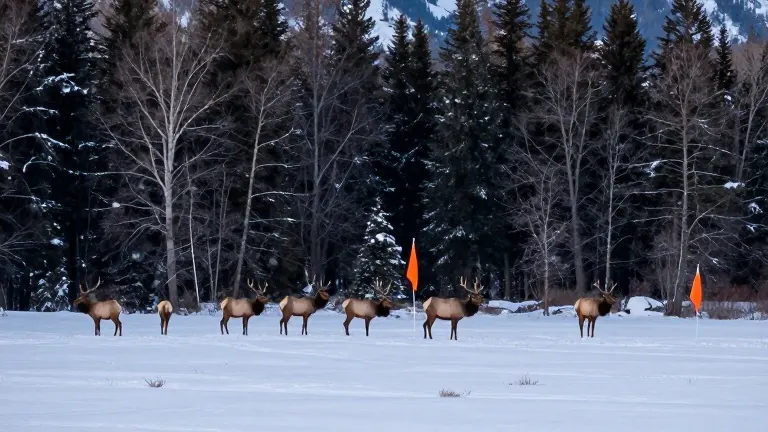
The elk-reduction program in Grand Teton National Park opens Saturday and runs through Dec. 6.
The National Park Service and the Wyoming Game and Fish Department have authorized 40 permits for this year's hunt. Only centerfire rifles are allowed, and hunters must use lead-free ammunition. Archery equipment and handguns are prohibited. Each hunter must carry a non-expired can of bear spray weighing at least 7.9 ounces, which must be immediately accessible. The agencies strongly encourage tourists to wear bright colors near the hunt area, while hunters must wear bright fluorescent orange or pink.
Congress authorized this controlled reduction of elk in 1950 as part of legislation expanding the park. The hunt has taken place almost every year since then. The agencies describe the program as a vital tool for keeping the herd's numbers in check. They note that if hunters do not take some elk, government agents may have to kill some to manage the population, even with the elk feedground at the neighboring National Elk Refuge.
Local wildlife photographer Jeffery Soulliere has opposed the hunt since 2014. He was photographing bison during the opening day of that year's hunt when a bullet flew past him, producing a cracking sound in the cold air. He said he does not see the sense in having hunters shoot at elk in clear view of tourists. "It's insanity," Soulliere said. "You have tourists coming in for Thanksgiving, with kids, and they get to watch this." Soulliere supports hunting in general but believes this specific format is inappropriate for a national park setting.
Chuck Lakovitch, a local hunter and gym owner, views the hunt differently. He shot his first bull elk during a Grand Teton hunt in the 1980s as a high school freshman. He said the program is an integral part of wildlife conservation in Wyoming and Montana. "If a tourist has an issue with that, well then, go back home," Lakovitch said. He noted that many hunters rely on the fresh elk meat to fill their freezers. He also pointed out that bull tags have not been available for many years, making his past success in the lottery feel like a stroke of luck.
Jorn Vangoidtsenhoven, another photographer, understands the need to prevent starvation among the elk herd. However, he described the event as more of a cull than a traditional hunt. "It's not exactly an example of fair-chase hunting when hunters gun down elk while they migrate," Vangoidtsenhoven said. He compared the activity to target practice rather than shooting.
The hunt has faced scrutiny in the past. In November 2012, an adult male grizzly bear charged three hunters near the east bank of the Snake River. The 534-pound bear had stashed an elk carcass and charged from about 42 yards. One hunter used bear spray, while the other two shot the bear when it closed to about 10 feet. No charges were filed against the hunters. In 2014, tourists reported seeing hunters shoot into a bunched herd of elk. At least one hunter was cited for violations, and two hunters were reported to have shot bull elk, which were not legal to harvest that year.
This year, no bull elk may be shot. The hunt is strictly for cow elk. The program continues its role in managing the park's wildlife population for the coming winter.
More News · Cheyenne news · Report a business · Got a Story?