Starship Test May End Falcon 9 Era
SpaceX plans a critical orbital flight for its new rocket today, a move that could retire the vehicle NASA currently relies on for astronaut transport.
By Simon Bennett ·
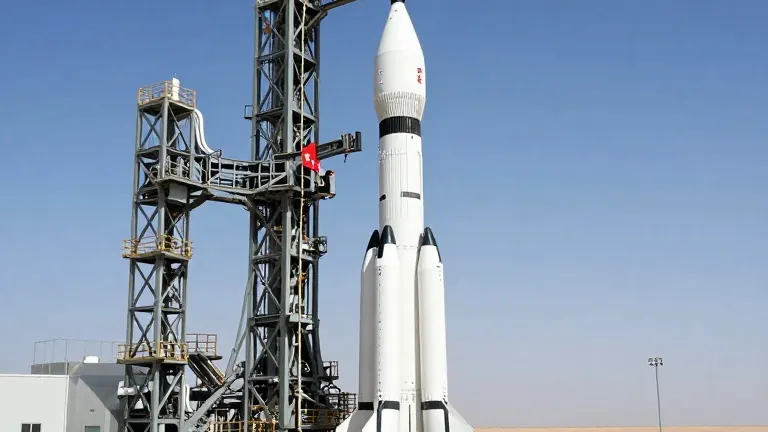
SpaceX attempts a critical orbital flight of its Starship rocket today. The vehicle is scheduled to launch from a pad in South Texas, circle the Earth, and land vertically at the same site 22.5 hours later. This test represents the most ambitious trial of the rocket to date. Success would mark a major milestone for a system Elon Musk says he intends to use to carry astronauts to Mars. However, the rapid development of Starship may soon leave NASA without its primary launch provider.
The transition threatens to strand NASA, which currently depends on the smaller Falcon 9 rocket. Falcon 9 launches the Dragon capsule, the only American spacecraft capable of ferrying astronauts to and from the International Space Station. SpaceX has indicated it will stop flying Falcon 9 to focus engineering resources on Starship. Caleb Henry, director of research at Quilty Space, noted that Dragon became the de facto way for astronauts to reach orbit due to its reliability.
NASA signed a contract in September for three additional flights to the station. These missions would allow Dragon to operate only through 2028 if flown consecutively. The space station is currently set to retire in 2030. This timeline creates a potential gap in American crewed spaceflight capabilities.
The relationship between SpaceX and NASA has reversed since 2008. At that time, SpaceX was nearly bankrupt after multiple Falcon 9 failures. Musk told CBS 60 Minutes in 2014 that he blurted out, I love you guys when NASA awarded a large contract days before Christmas. For the next decade, government contracts provided a significant share of company revenue. That changed in 2020 with the launch of the Starlink satellite internet service.
Starlink subscriptions now generate far more income than rocket launches. According to SpaceX financial reports, the company earned approximately $2.1 billion from space launches through September of this year. In contrast, Starlink generated about $12.8 billion, and its artificial intelligence business contributed roughly $10.9 billion. Starship is central to these newer ventures, as it launches V3 satellites for Starlink and potentially data centers to space.
SpaceX President Gwynne Shotwell compared Falcon 9 to a minivan and Starship to a vehicle suited for a six-month trip to Mars. She stated the company wants to move from older technology to newer systems. A recent analysis by Quilty Space suggests the commercial launch market may face a shortage of 150 launches between now and 2030. The U.S. Space Force said it secured Falcon 9 launches through 2028 and remains confident other suppliers will fill the remaining needs.
Boeing’s Starliner capsule could fill the gap, though it has faced development issues. A 2024 test flight resulted in a nine-month stay on the station instead of eight days. The next Starliner test is set for winter, with a crewed flight planned for 2028. Tim Farrar of TMF Associates noted that while the NASA missions are profitable, they are small potatoes for SpaceX. He observed that one would hope for some loyalty given that NASA helped prevent the company’s bankruptcy.
More News · Cheyenne news · Report a business · Got a Story?