World Kindness Day Prompts Reflection on Small Acts
Researchers and personal anecdotes illustrate how minor gestures of compassion can create measurable social ripples on the annual observance.
By Alyssa Parker ·
The global observance of World Kindness Day arrived on Friday, November 13, 2026, marking the 28th anniversary of the tradition. The date was established in 1998 by a coalition of international organizations, including the Small Kindness Movement of Japan. The movement advocates for acknowledging modest actions, having previously honored a Japanese taxi driver who stopped to remove trash bags from a roadway to prevent accidents.
Scholars and healthcare professionals shared perspectives on the mechanics of altruism during the observance. Dr. Junaid Nabi, a physician-scientist at the RAND School in Washington, D.C., and a senior fellow at the Aspen Institute, described kindness as a ripple effect rather than a isolated event. He cited research indicating that individuals who receive kindness are 25% more likely to help others. This phenomenon was illustrated by a 2012 incident in Winnipeg, Canada, where a customer at a Tim Hortons paid for the next person's coffee. The chain reaction continued until 226 customers had participated in the cycle of payment.
Marta Serra-Garcia, a professor of economics and strategy at the Rady School of Management at the University of California, San Diego, highlighted a psychological barrier to giving. Her study, Give Enough or Not at All, published in the September issue of the Journal of Economic Behavior & Organization, found that people often prefer giving nothing over donating an amount they deem insufficient. Serra-Garcia explained that givers frequently overestimate the minimum amount recipients require, leading them to withhold gifts to avoid appearing inappropriate. "You're generous, but because you want to do the right thing, you might end up not giving at all," she stated.
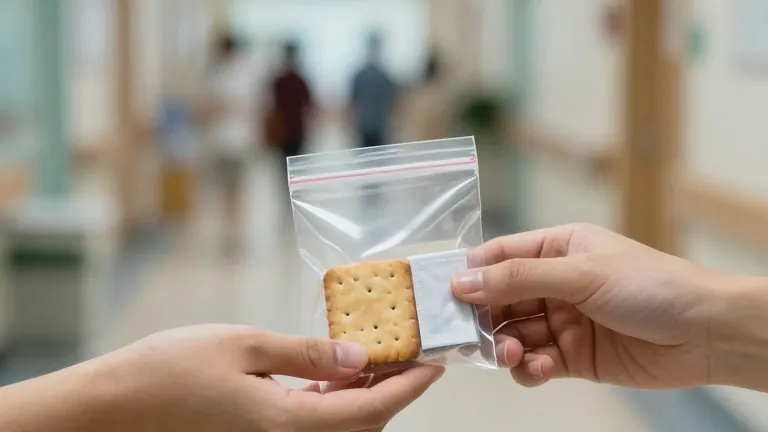
Maymunah Yusuf Kadiri, a neuro-psychiatrist in Nigeria, recalled an incident from 2004 that shaped her view of medical care. While working in the emergency room at Lagos State University Teaching Hospital, she was exhausted after 12 hours without food. An elderly cleaner handed her a small nylon bag containing a biscuit and a sachet of water. "Doctor, you need small strength to save people," the cleaner said. Kadiri, who was 28 at the time, said the moment reminded her that healing involves human connection, not just medicine. She now serves as a mental health advocate in Nigeria.
Huguette Diakabana, co-founder of The Luminous Agency in Switzerland, traced her current work in digital literacy to a single act of generosity in Zaire, now the Democratic Republic of Congo. At age 10, she dropped out of school because her family could not afford fees. She waited under a classroom window until the school director invited her inside. Years later, she discovered a school guard had paid her tuition. Diakabana launched a scholarship program to repay the gesture, following his advice to help others.
Jeff R. Temple, a psychologist at UTHealth Houston, noted that kindness is a central component of healthy relationships. He described school-based curricula, such as the Fourth R program, that teach adolescents perspective-taking and the impact of their words. Temple said these behaviors reduce bullying among students who understand the dynamics of supportive relationships.
Dr. Nabi also shared a personal account from the 2013 Savar building collapse in Bangladesh, where 1,040 garment workers died. Arriving as a Red Cross volunteer, he found that the disaster changed his approach to trauma care. "In the midst of chaos, with bodies awaiting identification, kindness came down to being present during others' darkest moments," he said. He described performing CPR on workers he knew would not survive and holding the hands of those who did. The experience shifted his practice from mechanistic task completion to deeper patient engagement.
The observance encourages participants to perform small acts of compassion, regardless of scale. Kadiri noted that recipients of kindness often feel motivated to pass that kindness on. The tradition serves as a prompt for individuals to examine their own habits of generosity and connection.
The date was selected to coincide with the annual declaration of the International Week of Kindness. The movement continues to expand its reach through educational initiatives and personal storytelling across various countries.
More News · Cheyenne news · Report a business · Got a Story?