26 Starlink satellites deployed as Starship booster falls into Gulf
SpaceX's upgraded rocket reached orbit Friday, but the first stage missed its target, ending hopes for a double recovery at the Texas launch site.
By Alyssa Parker ·
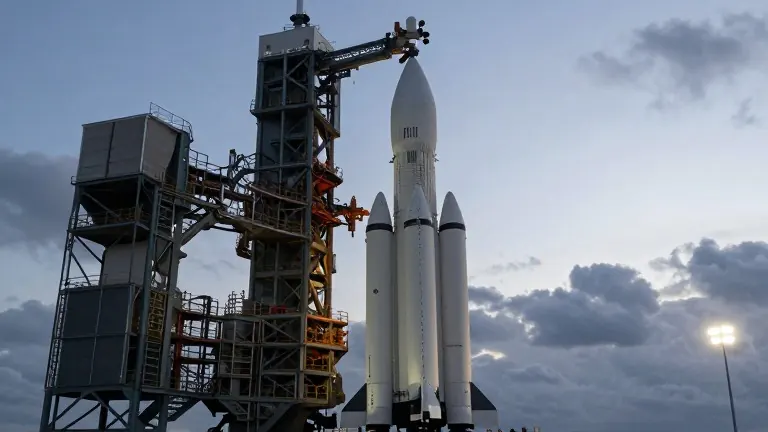
The Starship spacecraft reached orbit on Friday, completing a major milestone in SpaceX’s test campaign despite a failure on the ground.
The first-stage booster deviated from its planned trajectory and fell into the Gulf of Mexico, where it exploded. This outcome prevented the company from attempting its first double catch of both the booster and the upper stage at the Starbase facility near the U.S.-Mexico border.
SpaceX launch commentator Kate Tice addressed the loss shortly after the incident. She stated, “Well, that certainly isn’t the news that we had hoped to hear for today.” Tice noted that the decision to divert the booster was consistent with rigorous safety protocols designed to protect the launch pad. The company did not provide an immediate explanation for the specific failure.
The upper stage, which measures 171 feet, continued its flight as planned. It deployed 26 of SpaceX’s most advanced Starlink satellites shortly after reaching orbit. The spacecraft is scheduled to complete 15 laps around Earth at an altitude of approximately 170 miles before steering back to the launch site on Saturday. The total flight duration could extend to 22 hours.
This mission marked the first attempt to recover the upgraded booster model, which stands 236 feet tall. This version is designated as the production model for lunar and Mars expeditions. Combined, the booster and spacecraft form a vehicle 407 feet high, making it the largest and most powerful rocket in the world.
SpaceX had successfully recovered the smaller previous booster version three times at Starbase. The loss of the new, larger booster is a notable setback for the company’s goal of full reusability. Elon Musk views rapid launch rates and complete rocket recycling as essential steps toward building moon bases and sending humans to Mars.
The spacecraft is expected to be caught by mechanical arms on the launch tower Saturday, barring further complications. This would be the first time a Starship upper stage is retrieved from orbit. In the 14 previous Starship test flights, the upper stages ended in the ocean, either by design or due to failure. The last test flight in September was the first to reach orbit, but no recovery was attempted.
SpaceX plans to begin launching Starships from Florida within months and from Louisiana in a few years. Kiko Dontchev, vice president of launch at SpaceX, said at a NASA summit last week that scaled-up infrastructure and full reusability are necessary to increase launch rates from zero to thousands per year. NASA Administrator Jared Isaacman posted on X that he is looking forward to using on-orbit Starlink capabilities for the Artemis III mission next summer.