
Breaking: Anthropic IPO Valuation Hikes Stock Price Expectations Amid Massive Deficit
The proposed 2.5 to 3 trillion dollar valuation contrasts sharply with annual revenue under 20 billion dollars and a 500 billion dollar deficit.
By Simon Bennett ·
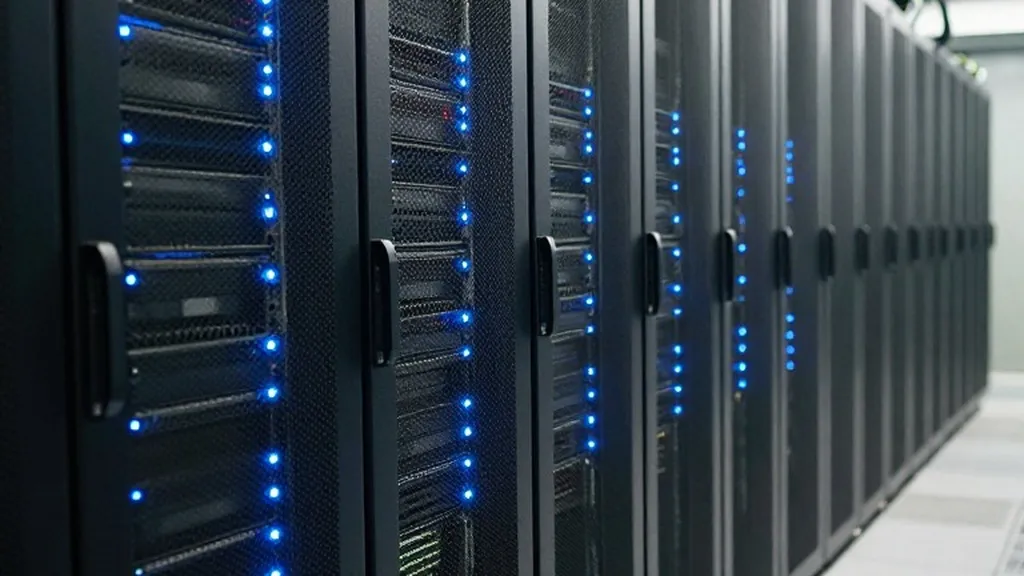
Anthropic is preparing to go public with an initial public offering that projects a company valuation between 2.5 trillion dollars and 3 trillion dollars. This figure stands in stark contrast to the company’s current financial reality. The maker of the Claude models operates with a deficit of about 500 billion dollars. Meanwhile, its annual revenue remains under 20 billion dollars. For everyday users and local businesses in Cheyenne, this gap raises a fundamental question. How can a company that loses 500 billion dollars be worth 2.5 to 3 trillion dollars? The answer lies in the massive infrastructure deals that anchor the company’s future.
The core of the IPO math involves compute commitments to other companies. Anthropic has signed agreements with major players including Amazon and Google. These commitments total up to 900 billion dollars. This number represents the cost of the raw power needed to run the AI models. It is a heavy financial burden that sits on the company’s books. The projected valuation assumes that this expensive infrastructure will eventually generate enough profit to justify the high price tag. Investors are buying into that future promise rather than current profits.
For a local business owner or a daily user, the impact of this IPO is tied to the cost of using the software. A Claude subscription allows users to access the models for various tasks. Light users typically pay about 20 dollars a month for a base plan. Heavy users, such as professional coders using Claude Code, pay 200 dollars a month. These prices reflect the cost of the compute resources required to process each request. The company is not making money from these daily interactions in a way that covers its massive losses. The deficit suggests that the current user base is not yet profitable enough to sustain the valuation.
The GPU bottleneck is a critical factor in this economic equation. A single Nvidia RTX Pro 6000 graphics card can support specific user loads. It can hold about 15 to 20 light users running light compute tasks. These users generate about 60 to 70 tokens per second. Alternatively, the card can serve 1 to 2 heavy coding users. These heavy users generate about 40 to 50 tokens per second. This assumes constant use for 24 hours a day. In reality, most light users do not use the chat for more than a few hours a day. This means the bandwidth can stretch further, but the cost of acquiring the hardware remains high.
The cost of the hardware is a significant barrier. An RTX Pro 6000 retails at 20,000 dollars as of now. This price does not include the servers, switches, CPUs, and processors needed to run the machines. It also excludes data center facility costs and electricity. Buying the cards from Nvidia direct at a wholesale price of 3,000 to 4,000 dollars changes the math slightly. The GPU alone takes about 10 months of a heavy user paying 200 dollars a month to pay back. It takes about the same time for the 15 to 20 light users paying 20 dollars a month to cover the cost. The breakeven point is far away for most individual users.
Nvidia, the primary supplier of these graphics cards, plays a strategic role in this market. The company drives demand up and lowers supply. Nvidia gives all its supply to the large players like Anthropic, Grok, and OpenAI. The consumer market is left fitting the bill. This dynamic ensures that the big AI companies have the resources they need. It also keeps the cost of entry high for smaller competitors and independent developers. The control over the physical hardware gives Nvidia significant leverage in the AI economy.
Recent events have highlighted the tension between open access and corporate control. Nvidia agreed to acquire Hugging Face for 12.9 billion dollars. Hugging Face is the platform where most open AI models are distributed. The company makes about 150 to 200 million dollars a year in its peak years. The acquisition price is about 70 times its revenue. While 12.9 billion dollars is pocket change for Nvidia and its CEO Jensen Huang, the deal has significant implications. The stated reason was CUDA, the software that runs all these models. The deeper reason was control of the distribution of models on the market.
The open source market faced disruption after the acquisition. Advanced Chinese models like Kimi from Moonshot AI, DeepSeek, and Qwen from Alibaba had been flooding the market. These companies were willing to give the models over to the public to increase innovation. Kimi K3 started to outperform the Opus 5 models from Anthropic. After Nvidia acquired Hugging Face, advanced models were deleted from distribution. Anything over a quant 4 was removed. The 4 bit, 6 bit, 8 bit, and 16 bit full sized models were banned from the platform. Developers rallied to stop this move and opened Pirate Face, a new place to upload and download models.
The government has also played a role in shaping the landscape. Anthropic demanded that Congress ban Chinese models due to national security concerns. The company recently released media suggesting AI would take over the world after a disgruntled employee named Jacob Coxon quit. This publicity stunt helped drive a panic. Congress passed a bill that now bans any government and its affiliates from using any Chinese models. Anthropic is now trying to pass bills to stop other companies like Verizon from launching their own AI models in house.
Anthropic’s own product history shows a pattern of control. The company released Fable 5 and Mythos 5 on June 9, 2026. The U.S. Department of Commerce issued an export control directive shortly after. Anthropic suspended access to these models worldwide on June 12, 2026. The models were solving too many problems, which led the company to pull them off the shelf. This action was less about winning the AI race and more about controlling it. The suspensions highlight the company’s willingness to limit access when it deems necessary.