Carnegie family seeks new homes on Cumberland Island in land swap
The National Park Service proposes exchanging parkland for private plots to allow up to eight new houses, sparking debate over preservation.
By Alyssa Parker ·
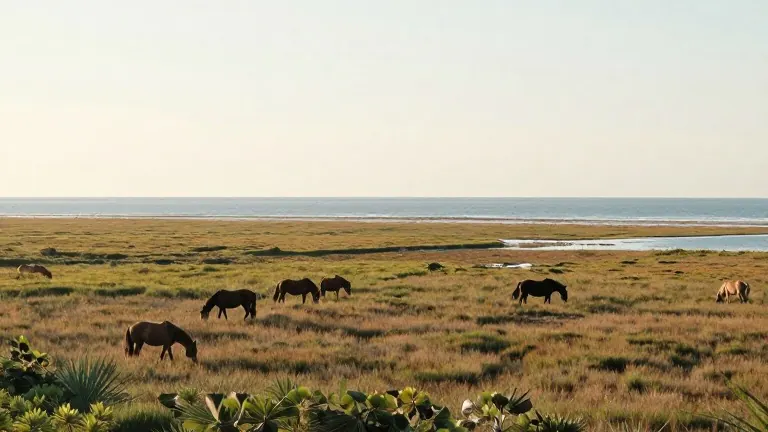
The National Park Service has proposed a land swap on Cumberland Island that would allow Carnegie descendants to build up to eight new private homes. The plan exchanges currently protected parkland on the island's west side for private property held by two branches of the family. Superintendent Melissa Trenchik said the move aims to consolidate private ownership so the park can better manage natural and cultural resources on the Atlantic beachside.
Cumberland Island has been a national seashore since 1972. An act of Congress designated roughly 9,800 acres as wilderness, stating the area should be permanently preserved in its primitive state. The island features salt marshes, maritime forests, and beaches accessible only by ferry. It is home to wild horses, feral hogs, and deer, as well as historical sites including Spanish mission remnants and Gilded Age homes built by Thomas Carnegie and his wife Lucy.
Descendants of Thomas Carnegie, the brother of Andrew Carnegie, still live or vacation on the island. The proposed swap involves land under a grove of live oaks overlooking the Cumberland Sound and Naval Submarine Base Kings Bay. Trenchik told media that the family wants to be near this view. The new homes are limited to 35 feet in height and must meet permanent conservation requirements. The Park Service received more than 12,500 public comments on the proposal.
Critics argue the deal benefits specific families rather than the public. Joseph Manning, an attorney with Defenders of Wildlife, said the 15,000-square-foot allowance for homes, driveways, and outbuildings is not modest. He described the new structures as McMansions and linked the swap to a pattern of privatizing public lands. Manning stated that these exchanges are often done to benefit a particular special interest or a handful of individuals.
Barclay McFadden, a great-great-grandson of Thomas Carnegie, defended the plan. He said the family has been stewards of the island since the 1970s, when his grandmother's generation chose to keep the land rather than sell it to developers. McFadden noted that five generations of his family are buried in the local cemetery. He called the debate over mansions unfounded and said the island is a sacred place for his children and grandchildren.
Jamie Ferguson, McFadden's cousin and the family's unofficial historian, co-owns the Greyfield Inn, a former Carnegie mansion now used as a bed and breakfast. Ferguson said the swap could improve visitor access to The Chimneys, a historical site where enslaved workers lived. He believes the family is part of the island's cultural history and that this role comes with responsibility.
Carol Ruckdeschel, an ecologist who has lived on the island for more than 50 years, opposes the swap. She serves as a key voice for the conservation group Wild Cumberland. Ruckdeschel, 85, surveys the beaches every Friday morning to look for sea turtles. She called the plan an affront to the American people and an insult to the Park Service. She also objected to the agency's plan to double daily visitation to 700 visitors.
Ruckdeschel said the island is entering a climax stage of rewilding, where nature is overtaking old plantation cotton fields. She believes the island should remain a pure primitive wilderness where nature takes over what humans have left behind. She stated that she would have loved to see the whole island return to nature, allowing places to go back to their wild state.
More News · Cheyenne news · Report a business · Got a Story?