Democrats win Texas Senate seat in 1988
The 2026 midterm elections marked the largest Republican loss in a sitting president's term since 1974, with James Talarico capturing a seat once held by the party of Ronald Reagan.
By Simon Bennett ·
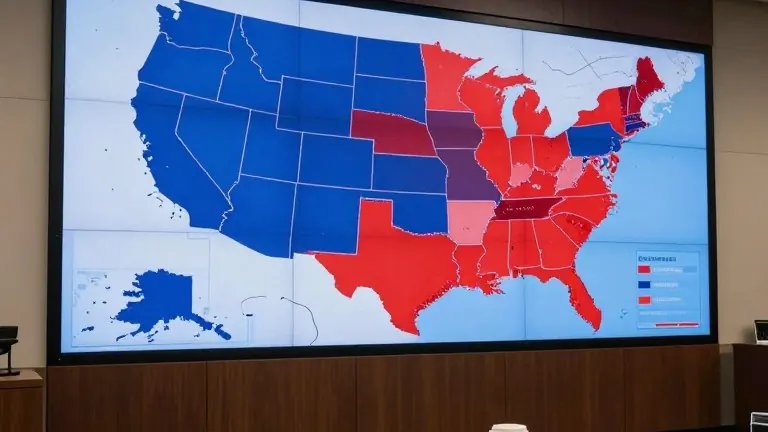
James Talarico won the US Senate election in Texas on Tuesday, marking the first Democratic victory in that state since 1988. The result symbolized a nationwide shift that dismantled the coalition supporting President Donald Trump. Democrats took control of both chambers of Congress in the most sweeping midterm defeat of a sitting president since the 1974 Watergate election.
The Republican losses extended beyond swing districts into deep red strongholds. The party lost seats in Kansas and South Carolina, leaving Senator Ted Cruz as the only statewide Republican still in office in Texas. Patrick Gaspard, a former official in the Obama White House, described the outcome as a break from the models that predicted a more stable political map. He stated that the results busted all demographic and geographic projections.
Economic factors drove the shift among voters who supported Trump in 2024. Frank Luntz, a pollster, noted that affordability issues hurt Trump voters disproportionately because many are paycheck to paycheck. These voters felt betrayed by the failure to lower prices and end foreign conflicts. Luntz said the 2026 vote was about holding Republicans accountable for promises made regarding the economy and wars.
The coalition fractured across key demographic groups. Republicans lost most of their 2024 gains with Latino voters according to an Associated Press poll. Only about one in 10 Black men voted for a Republican in their local House race, down from roughly one in four in 2024. Voters under 30, who were previously evenly divided, backed Democratic House candidates by a ratio of seven to three. This demographic shift weakened the base of support for the party's populist wing.
The defeat opened the 2028 presidential race to new contenders. Vice President JD Vance posted on social media that the war in Iran was the primary reason for the loss. Other potential candidates include Ron DeSantis, Marco Rubio, Nikki Haley, Spencer Cox, and Glenn Youngkin. Newt Gingrich, a former House speaker, wrote that the scale of the defeat makes the nomination race wide open. The party must now determine if it will follow Trump's lead or develop a new political identity.
Trump responded to the election by focusing on his administration's infrastructure projects rather than the results. He visited the construction site of a new White House ballroom and signed a structural beam. A White House social media post stated that Trump is still your president. The party faces the challenge of maintaining its populist foundation while adapting to a political landscape that has moved away from the leader who defined it for a decade.