Eisenkot and UTJ clash over draft as coalition talks begin
The Yashar leader insists on universal service, while the ultra-Orthodox party demands exemptions for yeshiva students.
By Alyssa Parker ·
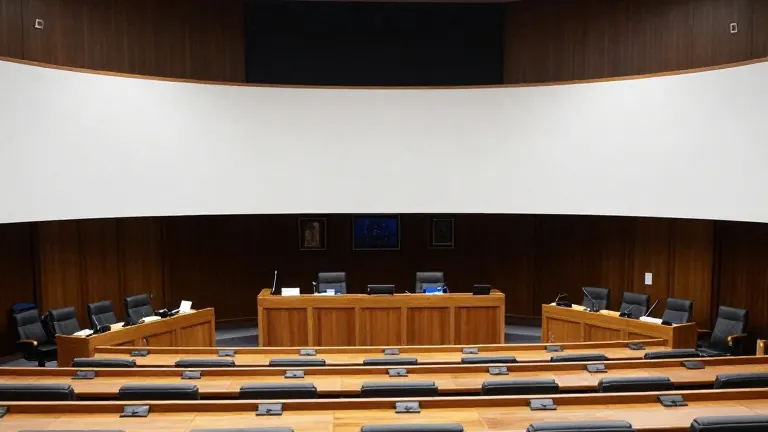
Gadi Eisenkot and Ya’akov Asher face a direct contradiction at the start of coalition talks. Eisenkot, tasked with forming the next government, declared on Tuesday that he will not compromise on national service for all citizens. Asher, the head of the United Torah Judaism party, countered that his party will not join any coalition unless it secures military exemptions for religious students.
The dispute follows last month's election, in which Eisenkot's bloc won 48 seats. His party ran on a platform of universal military, national, and civilian service. In contrast, the ultra-Orthodox United Torah Judaism party, a former ally of Prime Minister Benjamin Netanyahu, rejected the new leader's principles. UTJ previously declined to back Netanyahu for another term because he failed to pass legislation exempting yeshiva students from the draft.
Eisenkot addressed his faction ahead of the swearing-in of the 26th Knesset. He described Israel as being at a security and economic watershed, calling it perhaps the most challenging period since the state's founding. He vowed to create a national emergency government without giving up his commitment to service for all. He did not specifically mention Haredi or Arab parties but said his arm is outstretched to any partner willing to accept his coalition's principles.
Asher told the Kikar Hashabbat news site that UTJ has three nonnegotiable demands. The party requires exemptions for students in Jewish learning institutes, protection of funding for unregulated Haredi schools, and preservation of the status quo between religion and state. He stated that without the conscription arrangement, there would be no coalition. Fellow UTJ lawmaker Yitzhak Goldknopf told Channel 12 that preliminary contacts are already underway with Eisenkot's camp.
Shas, the other major ultra-Orthodox party, said it is not leaving Netanyahu's bloc. The party's rabbinic steering council instructed lawmakers to recommend Netanyahu after he committed to passing a law regulating yeshiva students. Finance Minister Bezalel Smotrich urged Haredi parties to reject talks with Eisenkot, warning they would be dumped after helping oust the right-wing government.
Avigdor Liberman, chair of Yisrael Beytenu, ruled out a coalition that relies on Arab parties. He specified a 61-seat government consisting of Eisenkot's 48 seats plus the 13 seats held by UTJ and Shas. He acknowledged that the party's goal of universal conscription will require a different model that survives High Court tests. He said the first government decision will be to establish a commission of inquiry into the October 7, 2023, attack.
Yair Golan, chair of The Democrats, urged partners to form a government quickly and not rule out Arab parties. He said any citizen who serves in the healthcare system deserves a seat in government. Naftali Bennett, whose B'Yachad party won 12 seats, said in a leaked message that his party is working to help Eisenkot build a Zionist coalition to replace the current government.