High Court Clears Texas Border Wall Work
The Supreme Court reversed an El Paso injunction, allowing the Trump administration to resume constructing barriers in Big Bend National Park.
By Alyssa Parker ·
The U.S. Supreme Court issued an unsigned five-page decision on Monday that permits the Trump administration to proceed with border barrier construction in west Texas. The ruling allows the government to continue building hundreds of miles of security infrastructure while a lower court hearing continues. Justice Ketanji Brown Jackson was the sole dissenter in the decision.
The legal dispute centers on a temporary injunction issued by a federal judge in El Paso. That order had halted the construction of 30-foot-tall steel barriers, patrol roads, and surveillance systems. The Supreme Court determined that the federal judge lacked the authority to weigh in on the matter. The high court stated that the injunction prevented the government from advancing its compelling interests in border security.
The federal government filed an emergency application in late October, urging the justices to intervene. Solicitor General John Sauer described the lower court's injunction as baseless and unprecedented. He argued that a gap in border defenses in the Big Bend region would act as a dangerous magnet for cartels and other bad actors. The administration claimed that a pocket of the border without a barrier would become a funnel point for crossings that are otherwise thwarted.
The lawsuit was brought by the Center for Biological Diversity, an environmental advocacy group. They joined forces with a local nonprofit working to preserve a historic church near the border and a landowner who stands to lose property. The plaintiffs argued that the Department of Homeland Security's plans were unconstitutional. They contended that Big Bend residents would suffer irreparable harm if the construction continued.
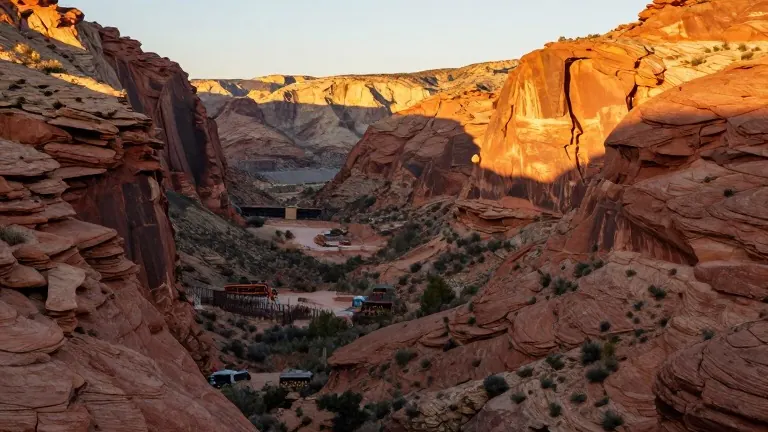
The plans have drawn criticism from both political parties due to their inclusion of Big Bend National Park. Residents and officials across the spectrum expressed concern that a wall was unnecessary in a region known for its rugged terrain and desert heat. They cited potential threats to the environment, Indigenous sites, the tourism economy, and wild animals. Laiken Jordahl of the Center for Biological Diversity said the decision greenlights contractors and allows bulldozers to return to the region.
The court noted that federal law allows Secretary of Homeland Security Markwayne Mullin to waive environmental protections and conservation laws. The justices characterized this as a clear preference for expeditious border construction over the harms asserted by the respondents. The decision specifically mentioned the dynamiting of national park canyon walls and the bulldozing of pristine desert.
Historically, the rugged landscape of the Big Bend area has resulted in fewer people attempting to cross into the United States. The Big Bend Sector covers a nearly 500-mile stretch of the border and is managed by U.S. Customs and Border Protection. This sector makes up over a quarter of the total U.S.-Mexico border. According to CBP data, it regularly records the fewest number of encounters along the Texas border.
More Politics · Cheyenne news · Report a business · Got a Story?