Pope Leo XIV targets machismo and abuse in Lima
The Peruvian pope addressed gender-based violence and clergy misconduct during his homecoming, meeting with six survivors of a suppressed religious group.
By Alyssa Parker ·
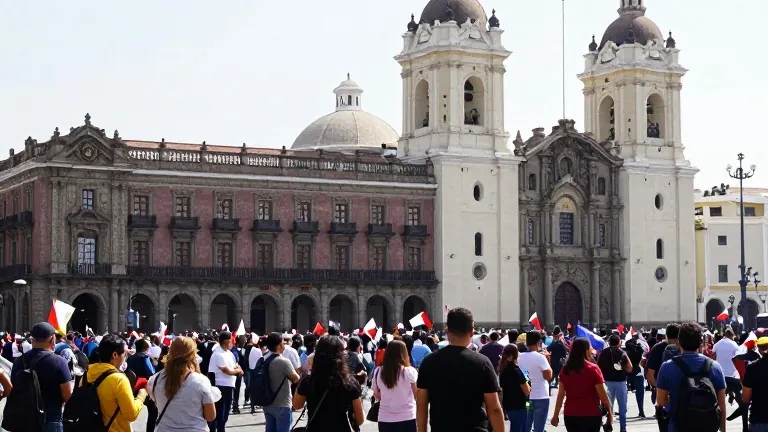
Pope Leo XIV returned to Peru on Thursday with a clear mandate for the local church: protect women and address the legacy of clergy abuse. The 71-year-old pontiff, who was born and raised in the country, used his second day in Lima to outline specific expectations for Peruvian bishops and to speak directly to the nation's social challenges.
In a speech delivered in Lima’s Plaza Mayor, Leo condemned the culture of machismo that persists in Peruvian society. He stated that violence against women contradicts Christian teaching, which holds that men and women possess equal dignity. The pope noted that poor, Indigenous, and Afro-Peruvian women face double penalties in this system. He called for these women to be valued, protected, and respected as essential members of the community.
The statistical backdrop to his remarks is stark. Peru recorded 1,261 femicide victims between 2016 and 2024, according to the National Institute of Statistics and Informatics. During that eight-year period, the number of women killed because of their gender rose by 44 percent. Nicole Cruz, a local resident who attended the speech, said she hopes the pope’s words will help men understand that women are seeking help and recognition, not merely complaining.
Leo also addressed the issue of sexual abuse within the clergy. He described the scandal as a reality that has caused deep pain and instructed bishops to respond with truth, justice, and forgiveness. He urged them to make amends and to build a culture of prevention and protection for the most vulnerable. This instruction followed his first two legs of the South American trip, where he demonstrated physical vitality despite undergoing lung cancer surgery last month. He joked with local bishops that some doubters had predicted he would be unable to make the journey.
The pope put his words into action by meeting with six survivors for one hour. Among them were former members of the Sodalitium Christianae Vitae, a powerful religious movement in Peru. Pope Francis suppressed the group last year after an investigation found sadistic abuses of power and spirituality, as well as financial misconduct. The Sodalitium continues to hold economic influence in the country.
The investigation into the Sodalitium followed a 2015 book by journalist Paola Ugaz and victim Pedro Salinas, which detailed abuses by the group's founder, Luis Figari. Former members had complained to the archdiocese in Lima in 2011, but concrete action did not occur until the book was published. Leo served as the Peruvian bishops' point person for welcoming victims during his time as bishop of Chiclayo, giving him a direct connection to the case.
José Escardó, the first whistleblower who documented his abuse in 2000, was present in Lima. He criticized the church's rhetoric as empty when it comes to punishing clergymen. Outside the house where Leo is staying, Escardó noted that the pope has not responded to letters from victims for more than a year. He argued that these acts are crimes that must be punished, not merely mistakes or sins.
The scope of the abuse crisis extends beyond the Sodalitium. The online database BishopAccountability has identified 77 priests, brothers, seminarians, and laypeople consecrated in Peru who have been publicly accused of sexually abusing minors. The organization stated that this figure is a small fraction of the total, noting that victims in the overwhelmingly Catholic country have often not come forward due to the church's deep influence.
The visit began with a massive welcome for the former Robert Prevost, who spent two decades as a missionary in Peru. He modeled his episcopal vision on St. Turibius de Mogrovejo, the 16th-century archbishop of Lima who studied Indigenous languages to better communicate the faith. Leo urged current bishops to follow this example by entering homes, accompanying the sick, and reaching out to remote and vulnerable communities.
The emotional weight of the homecoming was evident in the crowds. Forty thousand people in the Plaza Mayor sang national unity songs to the pope, while an additional 600,000 gathered for a vigil in a nearby stadium. Leo sang along with the crowd, showing a level of public relaxation not often seen since his election in 2025. He bounded up a steep flight of stairs without apparent difficulty, reinforcing the impression that he is in fine form for the remainder of his trip.