Rancher Cattle Prices Fall 20% As Federal Beef Import Plan Near End
Farm Action data shows a $319 loss per cow for Wyoming producers, while grocery store prices remain largely flat.
By Alyssa Parker ·
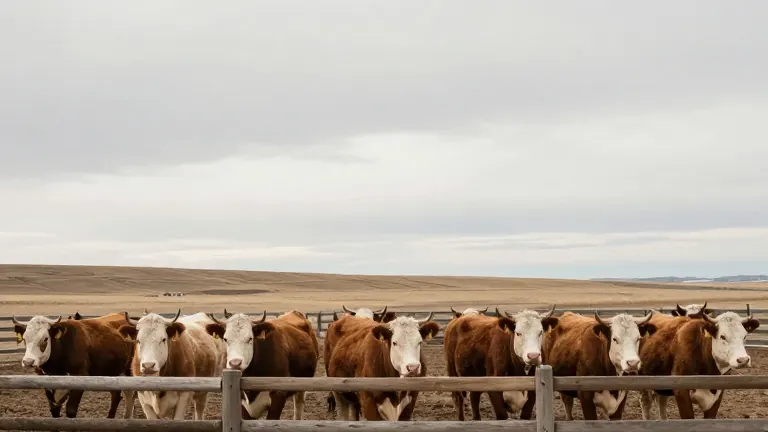
Cattle prices in Wyoming have dropped by nearly 20 percent since the start of the federal government's 90-day beef import plan. The policy took effect on September 1 and is scheduled to conclude on November 30. According to a new analysis by Farm Action, a farmer advocacy group, the financial burden of the initiative has landed primarily on ranchers rather than consumers.
For a typical rancher selling a 1,200-pound cow, the price decline represents a loss of approximately $319 in revenue per animal. Meatpackers are currently paying 16.6 percent less for lean beef, yet shoppers report seeing only minor savings at the register. The imported beef trimmings are intended to be blended with domestic beef to lower the cost of ground meat.
Tyler Lindholm, a rancher in Crook County and the Wyoming state director for Americans for Prosperity, said the results were predictable. "It's wild. It's almost like we've done this before," Lindholm said. He noted that the imported trimmings are not products that consumers buy directly. Instead, they are raw ingredients used by large processors. Lindholm questioned how savings reach the grocery store when the discount is applied to a component that most shoppers never see on a label.
President Donald Trump announced the plan in August, allowing an additional 300,000 metric tons of lean beef trimmings into the United States over a 90-day period. The administration stated the move would lower ground beef prices while giving domestic ranchers room to rebuild the cattle herd. Lindholm pointed to a recent White House visit by the CEO of JBS, one of the world's largest meatpacking companies, which occurred shortly before the announcement. "Correlation is not always causation, but in this situation, it certainly looks like the big packers captured our president," Lindholm said.
Sarah Carden, Farm Action's senior director of research and policy, said the current data illustrates an imbalance in the supply chain. "What’s striking about these numbers is how much of the price pressure is falling on cattle producers while meatpackers continue to benefit," Carden said in a statement. She argued that lowering payments to ranchers is not a sustainable method for making beef affordable and that the industry needs more competition.
Agricultural economist James Mitchell at the University of Arkansas told Brownfield Ag News in October that retail beef prices had remained largely unchanged. At that time, only 38 percent of the first month's 100,000-metric-ton import quota had been filled. Mitchell noted that cull cows, which are older breeding cows removed from herds, faced significant price pressure. These sales typically account for 15 to 30 percent of cow-calf revenue for a ranch operation.
The timing of the announcement in late August coincided with fall calf sales, a critical period for rancher income. Lindholm described the move as a difficult blow to producers already managing unpredictable markets. He said the policy overlooked the people producing the beef and prioritized other interests. Lindholm cited a survey by Americans for Prosperity in seven battleground states, where 84 percent of voters cited the cost of living as a top reason for their voting choices.
Lindholm suggested that some producers consider diversifying their operations, a practice common among western farmers before World War II. He said raising multiple commodities or marketing beef directly to consumers could help ranchers capture more value from their livestock. Farm Action plans to release a final assessment of the program when the 90-day period ends at the end of November.
More Business · Cheyenne news · Rip-Off Report · Report a business · Got a Story?