Caswell Hollywell and the 2026 Question: Is Music's Authenticity Real?
A wave of new bands and a rise in AI-generated content are forcing a debate about what counts as real in music.
By Simon Bennett ·
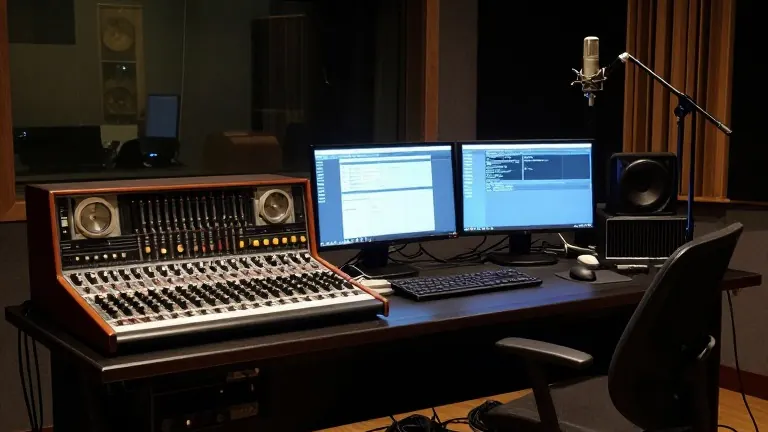
Music's authenticity is being questioned again.
Caspian Hollywell, frontman for the New Orleans band Twisted Teens, sings about salvation or medication in a song titled "Is it real?" The song asks whether the music is genuine, a question that mirrors a wider concern across the industry. Reports of plagiarism, nepotism, rigged viral successes, and counterfeit records have surfaced throughout the year, leaving fans uncertain about the products they buy.
New bands are responding to this environment with direct, unpolished sounds. Groups such as Twisted Teens, Westside Cowboy, Mandy Indiana, underscores, and GENA are drawing attention for work that opposes the use of artificial intelligence in music production. Hollywell stated, "You can like us or you can hate us, but you can't say we're not real."
Debates over authenticity in music have occurred for decades. In 1979, Ry Cooder recorded the album "Bop Till You Drop" using a digital system, which was the first instance of a major label artist using such technology for a cleaner sound. Cooder later described the final disc product as "thin" and "cold." In the early 1990s, singer Yvette Marine accused Paula Abdul and her producers of using computers to combine her guide vocal with Abdul's voice for the song "Opposites Attract"; Marine sued but lost the case.
Concerns about technology are not the only factors in these discussions. In 2029, a correspondent for the Christian Science Monitor suggested that listeners accept radio broadcasts as a "true miniature of the event" while seeking out live performances. Forty years later, a critic for the Washington Post called recordings of the Woodstock festival both "a treasure and a fraud" because the audio fidelity and editing changed the event.
The book "Faking It," written by Hugh Barker and Yuval Taylor in 2007, outlines three standards for authenticity. Representational authenticity asks if an artist performed or composed the work. Cultural authenticity requires connections to specific communities or traditions. Personal authenticity questions whether a song reflects an artist's own experience.
The use of technology continues to raise questions. The holograms in London's ABBA Voyage have drawn crowds since 2022, just as Bing Crosby used reel-to-tape for a radio show in 1947. Public views of authenticity also change; the Monkees did not always play their instruments in the studio, but audiences accepted them for their performances on screen and on tour.
New technologies cause listeners to question authenticity, but social factors also affect these conversations. Ry Cooder, a white artist, collaborated with Black and brown musicians and was trusted by admirers. Paula Abdul, a Jewish woman whose father was born in Syria, began her career as a Los Angeles Lakers cheerleader. As a dancer and a white artist with Middle Eastern roots, she faced criticism from a rock-oriented media during the early 1990s.
The discussion continues as new bands release music and new methods of creating songs are used.
Source: Wyoming Public Media · original report published
More News · Cheyenne news · Report a business · Got a Story?