One Badger Devoured 25 Chickens in Laramie County
A resident describes a year of failed traps and reinforced coops as a single animal persists on her rural property.
By Simon Bennett ·
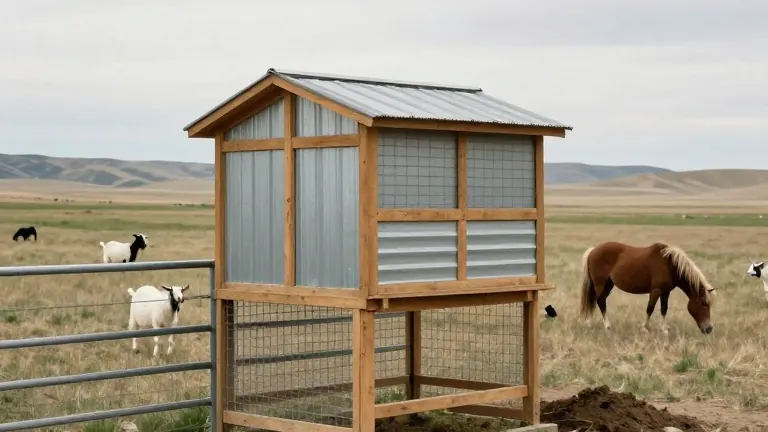
Heather Nicklas has lost 25 chickens to a single badger on her rural Laramie County property over the past year. The animal has continued to dig holes across her pasture and threaten her remaining livestock despite her efforts to trap and deter it. Nicklas, who keeps a Shetland pony, two alpacas, and three goats, now fears her larger animals may break legs in the numerous burrows. She has reinforced her chicken coop with metal siding, roof panels, and steel mesh buried along the perimeter to prevent further losses this season.
Nicklas said the badger first targeted her flock last year, killing approximately 25 birds. Since then, she has rebuilt her flock slowly. The animal is not a mother with babies, according to Nicklas, who has seen it only briefly. She described the badger as a lone animal that has established a permanent presence on her land. The activity has been most intense during the spring, summer, and fall, with a lull last winter.
Efforts to trap the animal have faced complications. Nicklas attempted to use a cage-style live trap baited with a chunk of beef heart. The trap caught one of her chickens instead of the badger. She avoided using snares or leg clamp traps because of her dogs, barn cats, and two young children on the property. Her livestock guardian dogs bark at the badger but have not succeeded in driving it away. Nicklas noted that her attention is often divided between her toddlers and monitoring the property.
Retired biologist Franz Camenzind of Jackson confirmed that badgers are persistent hunters that will seek alternative food sources when their primary prey, such as prairie dogs and ground squirrels, goes dormant for the winter. Badgers are not true hibernators and remain active longer than the rodents they hunt. Camenzind noted that the animal is likely looking for food to fatten up before the coldest months arrive.
Nicklas said new holes have appeared near her reinforced chicken coop. She is unsure if the badger is trying to breach the coop or is hunting for mice and ground squirrels living in that area. She has asked neighbors to help watch for the animal but has limited time to stay vigilant herself. She caught a glimpse of the badger from her vehicle at dusk recently and said it disappeared quickly before she could react.
Camenzind recommended that Nicklas try live trapping again with beef heart bait. He suggested that if she can hold out for a few more weeks, the badger’s activity should decrease as the weather turns colder. He advised moving the animal at least a couple of miles away if it is successfully trapped. Nicklas is currently seeking a trapper who can remove the animal from her property. She said she wants to resolve the issue before another winter approaches.
The badger’s presence has altered Nicklas’s daily routine on the property. She monitors the pasture for new holes and checks the integrity of her coop fortifications. The animal’s digging has permeated the area where her livestock graze. Nicklas remains determined to keep the badger away while protecting her remaining animals. She has not lost any chickens since reinforcing the coop this year.
Camenzind noted that badgers sometimes team up with coyotes to hunt prairie dogs, but they will exploit any available food source. He said the animal’s persistence is consistent with badger behavior when food becomes scarce. Nicklas plans to continue her search for a professional trapper in the coming weeks. She hopes to resolve the conflict before the badger becomes more active again in the spring.
More News · Cheyenne news · Report a business · Got a Story?