Turkey targets 36% electrification by 2040 with $500 billion investment plan
Energy Minister Alparslan Bayraktar unveiled a roadmap to quadruple renewable capacity and shift from coal, ahead of COP31 in Antalya.
By Simon Bennett ·
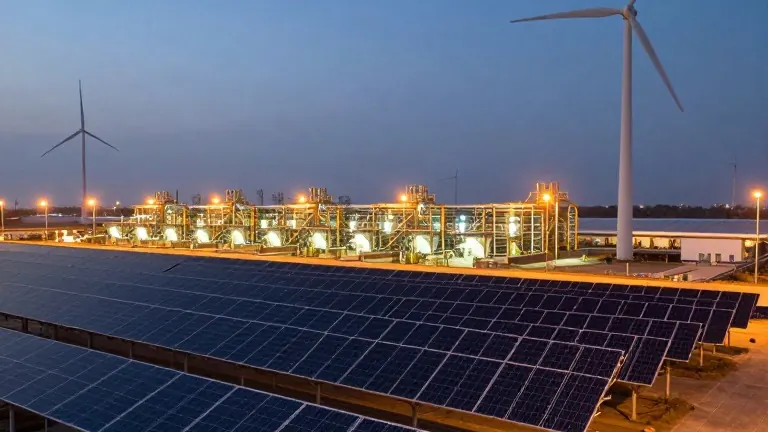
Turkey will increase its use of solar and wind power by more than four times in the next 13 years, according to a national energy plan released Friday. The government aims to reach 36% electrification by 2040, a milestone designed to cut emissions by 40% from current levels.
Energy Minister Alparslan Bayraktar presented the National Energy Plan 2040 during a news conference in Istanbul. He stated that the strategy seeks a "paradigm shift" in how the country consumes energy. The goal is to support Turkey's pledge to reach net zero emissions by 2053. Bayraktar noted that the transition requires substantial financial resources to succeed.
The plan calls for $500 billion in investment over the next 13 years. Turkish public sector companies are expected to provide approximately $210 billion of that total. The remainder will rely heavily on foreign investment. Bayraktar argued that global carbon neutrality efforts require shared financial responsibility. "If the world is serious about carbon neutrality.. we need to find the money," he said.
Coal currently generates 33% of Turkey's electricity, making it Europe's largest coal power generator according to the think tank Ember. Solar and wind energy account for nearly 23% of generation. The government intends to reduce reliance on coal, but Bayraktar emphasized the need for a "just transition" for the 30,000 to 40,000 workers employed in mining and power stations. He stated that coal remains necessary for supply security during the shift.
Transportation plays a central role in the electrification target. The number of electric vehicles on Turkish roads is projected to rise from roughly 500,000 to 20 million by 2040. The government also plans to expand nuclear capacity. The Akkuyu nuclear power plant on the Mediterranean coast is nearing operation, and a new station is planned for the Black Sea region.
Natural gas will remain a key energy source in the interim. Turkey recently began drilling gas reserves in the Black Sea. Bayraktar said annual production is set to double to 7.5 billion cubic meters in the coming years. He described the current energy market as turbulent, citing sanctions related to conflicts in Ukraine and Iran as obstacles to climate goals.
The Climate Action Tracker currently rates Turkey's climate policies as "critically insufficient" relative to the 1.5-degree target of the Paris Agreement. Bayraktar will attend the COP31 climate summit in Antalya next week. His central message to world leaders will be the need for "responsive and realistic policies" to achieve carbon neutrality within three decades.