Aspen Fire Department to Test AI-Driven Drones on Wildfires
The program will deploy five large drones capable of carrying up to 1,000 gallons of fire foam to remote areas.
By Alyssa Parker ·
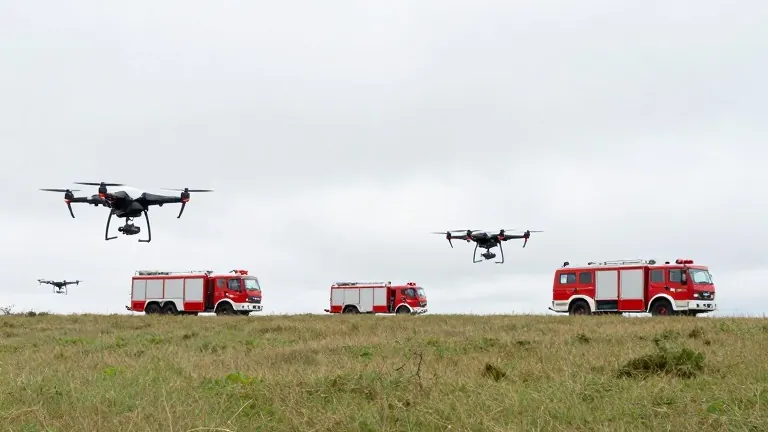
The Aspen Fire Protection District will become the first fire department in the world to operate a swarm of autonomous firefighting drones independently. The district plans to launch the program as early as next year after receiving a waiver from the Federal Aviation Administration in late October. This development marks a shift from using drones solely for monitoring to using them to actively extinguish flames.
The machines are manufactured by Seneca, a company based in California. Each unit measures 10 by 12 feet wide and resembles a large insect with four arms and propellers. A group of five drones can transport between 500 and 1,000 gallons of finished fire foam. Firefighters in Aspen reported that the controls are simple enough for a 12-year-old to operate. Andy Fisher, deputy chief of Aspen Fire, noted that the district intends to deploy these units to hard-to-reach fires, such as remote lightning strikes, before ground crews arrive.
The drones use artificial intelligence to calculate distance and wind speed while hovering over a fire. They then release water or retardant at specific angles and velocities to dampen flames. Stuart Landesberg, founder of Seneca, described the technology as similar to a flying self-driving car. The aircraft can traverse steep or treacherous terrain quickly. They have a range of five to ten miles when loaded and double that distance when empty.
The cost of the program is approximately $2.5 million over five years, funded by private donors. Landesberg stated that the drones will not replace air tankers on large fires but can help extinguish lingering hot spots and carry tools. He argued that the technology could make aerial firefighting more affordable than using helicopters. The drones can operate overnight when manned aircraft are often grounded, potentially reducing risk for pilots and ground crews.
Joe Stutler, a firefighter with nearly 60 years of experience, expressed interest in the technology but remained skeptical of its current effectiveness. He is not affiliated with Aspen Fire or Seneca. Stutler pointed out that the drones have only been tested on prescribed burns in California, not active wildfires. He said he has yet to see data backing the manufacturer’s claims. He emphasized that while the drones may help, they will not eliminate the need for firefighters on the ground.
The FAA waiver allows the drones to fly up to 200 feet in Pitkin County. The aircraft cannot fly over populated areas. A person must maintain visual contact with the drones at all times. Firefighters cannot send a drone over a ridgeline without an observer positioned on the other side to monitor it and communicate with the pilots. Aspen Fire hopes to expand the waiver if the initial tests prove the drones useful in fighting fires across the state.
More News · Cheyenne news · Report a business · Got a Story?