Cheyenne man testifies on isolation at Wyoming Boys’ School trial
Blaise Chivers-King told jurors in Casper that staff kept him in a barren detention room, leading to self-harm and a desire to end his life.
By Simon Bennett ·
Blaise Chivers-King told a jury in Casper on Tuesday that he attempted to strangle himself and remove his dental braces while confined in a detention room at the Wyoming Boys’ School. The former resident described a period of isolation where he felt cut off from the outside world, leading to what he called a desperate desire to end his life. His testimony marks the first day of witness evidence in the first of several lawsuits against the state-run facility near Worland.
Chivers-King, who lived at the school between 2020 and 2022, testified that he was 15 and 17 during his stay. He is one of six former residents who filed complaints against the facility in 2024. The 38-acre campus, which houses delinquent boys ages 12 to 21, operates under the Wyoming Department of Family Services. Chivers-King alleged that staff violated his 14th Amendment rights by placing him in isolation and using excessive force, infringing on his due process.
Video footage shown to the jury depicted Chivers-King engaging in self-harm during his time in detention. The clips showed him trying to strangle himself and banging his head against a wall. Chivers-King testified that staff instructed him to clean his blood after the head injury. He also described attempting to rip his braces off his teeth to use as a tool to stab himself.
"I was just trying to do everything I can to just end it," Chivers-King said softly during his testimony. He paused and began to cry as he recounted his feelings of hopelessness. His lawyers argued that staff subjected him to unnecessary solitary confinement when he needed help, rather than providing care.
The defense attorneys countered that school staff were responding to safety concerns and acted to keep everyone safe under difficult circumstances. Their questioning focused on Chivers-King's behavioral and mental health history prior to his admission. They highlighted instances where he suddenly became violent, punching, kicking, head-butting, and biting staff members after appearing calm. Defense lawyers also pointed to efforts by staff to assist him, such as providing a pencil and a self-help book while he was in detention.
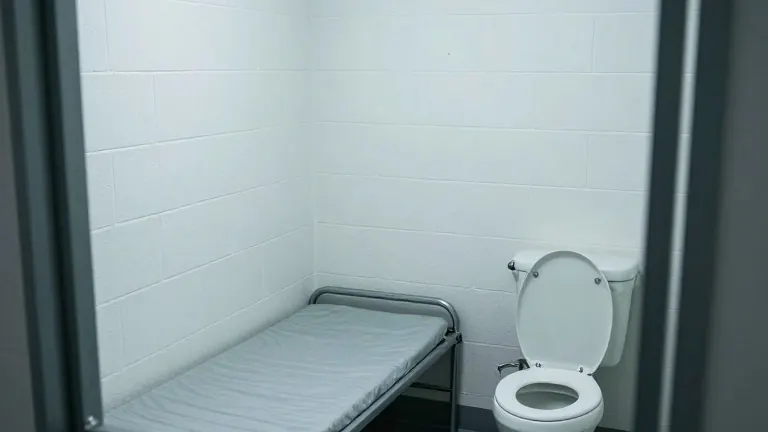
Photographs of the detention rooms revealed white cinderblock spaces containing only a toilet and a mattress. The rooms lacked windows that looked outside, and staff covered the small window in the door with a magnet. Chivers-King said the inability to see people or sunlight made time move extremely slowly. "It felt like a never-ending whirlpool, like a blackhole," he said. Video footage showed him trying to look through the crack under the door, which a staff member covered with a mattress.
A school document outlining requirements for a good day in detention stated that Chivers-King was expected to sit in the corner of the room without falling asleep. He testified that he struggled to meet these expectations. "I was getting antsy," he said. "I just needed someone to talk to." Videos of his isolation showed him pacing, hitting the overhead light, standing on the toilet, and popping the sprinkler system.
After breaking the sprinkler, Washakie County Sheriff’s deputies took Chivers-King to the county jail. He testified that he was treated better at the jail than at the boys’ school. "I wanted to stay there, actually," he said. The trial, which started Monday, is expected to last five to seven days. The next trial involving former residents is scheduled to begin on Dec. 7.