Israel Votes in Contested 2026 Election
Voters choose between Netanyahu and a rightward opposition bloc in the first election since the 2023 Hamas attack.
By Alyssa Parker ·
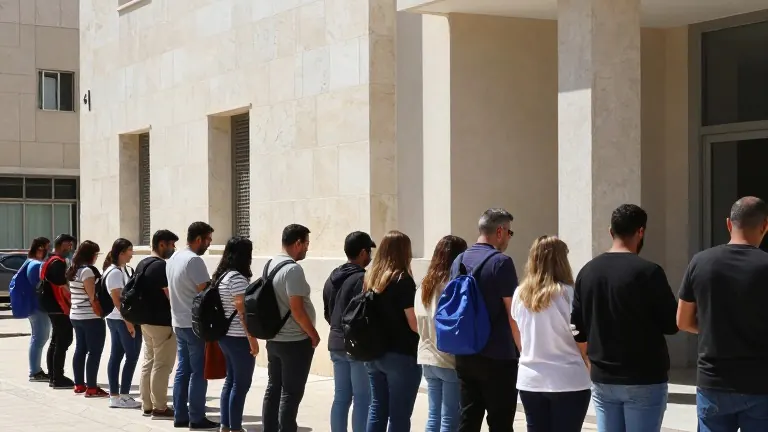
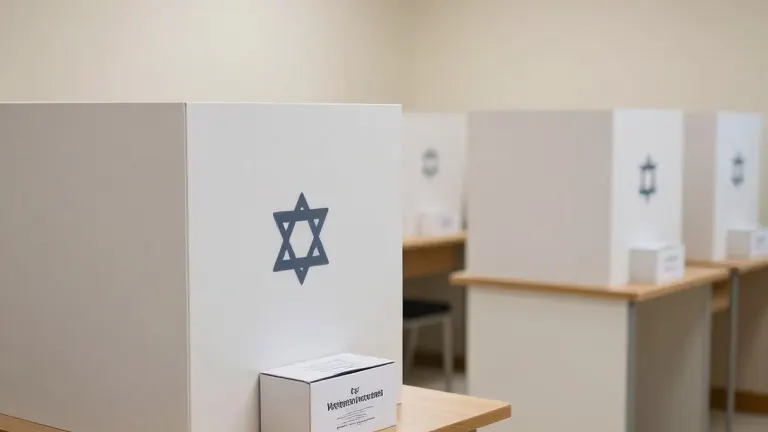
Israelis cast ballots on Tuesday in a tightly contested election that marks the first national vote since the Hamas-led attack of October 7, 2023. The campaign has been defined by a sharp shift to the right, with no major candidate offering a clear break from the governing coalition’s ideological direction.
Benjamin Netanyahu, the country’s longest-serving prime minister, seeks to extend his tenure. He currently leads a coalition of far-right ultranationalist and ultra-Orthodox parties. The Prime Minister faces a self-styled Zionist opposition bloc that has adopted a similar right-wing approach to Israel’s security and domestic challenges.
The race is complicated by legal and political pressures. Netanyahu is wanted by the International Criminal Court on war crimes charges in Gaza and remains under trial for bribery, fraud, and breach of trust, charges he denies. The campaign focused on accountability for security failures before the 2023 attack, the conscription of ultra-Orthodox men, and the exclusion of Arab-led parties from potential governing coalitions.
Analysts say the rightward drift accelerated under the current government. Officials including National Security Minister Itamar Ben-Gvir and Finance Minister Bezalel Smotrich supported a controversial judicial overhaul aimed at limiting the Supreme Court’s review powers. This move was part of a broader effort to reshape the state, though critics argue the political center had already eroded following the 2018 Nation-State Law and years of security crises.
Yehouda Shenhav-Shahrabani, an Israeli sociologist, argued that the political system operates within a framework of Jewish supremacy. "None of the leaders who present themselves as an alternative to Netanyahu can genuinely be described as left-wing," he stated. He added that the current reality is rooted in Zionist political thought rather than being solely the product of the far right.
Ahron Bregman, a senior teaching fellow at King’s College London, noted that a change in leadership would alter the political atmosphere more than the policy direction. "If Netanyahu loses the election and, say, [Gadi] Eisenkot becomes the new prime minister, the main initial change will be the atmosphere, the vibe," Bregman said. He described Netanyahu as a deeply divisive figure whose removal might calm domestic tensions but would not reverse the post-2023 rightward turn.
Yossi Mekelberg, a senior fellow at Chatham House, framed the vote as a choice between a functioning democracy and one in name only. He warned that the decision also determines whether Israel maintains its occupation of the West Bank or moves toward full annexation. "It’s the choice between maintaining the occupation of the West Bank or annexing it entirely and the population’s ‘voluntary migration’ from there," Mekelberg said.
The election does not include a direct referendum on the war in Gaza, where more than 74,000 people have been killed. Mainstream candidates have avoided discussing the inclusion of Arab-led parties in a future government. Daniel Levy, a former government adviser, stated that no side is arguing the war was a good thing while the other says it was a bad one. "So, no, obviously none of that is on the ballot," Levy said.
Levy added that the treatment of Palestinians is a consensus among Zionist parties. The differences among them lie in whether the state or settler militias should lead the effort. "Whether it’s the state’s job to oppress Palestinians, or if the settler militias also have a role, a significant role, to play," he explained. The result will determine which faction leads that effort.
The vote comes as deadly attacks continue in Gaza under a yearlong ceasefire and settler violence increases in the West Bank. The outcome will shape the next phase of Israel’s governance and its regional conflicts.
Source: Al Jazeera