French Student Protests Press On as Government Faces Budget Squeeze
Hundreds of thousands marched across France at the weekend over school conditions and living costs, while a deep fiscal crisis limits how far the government can respond.
By News Media House Staff ·
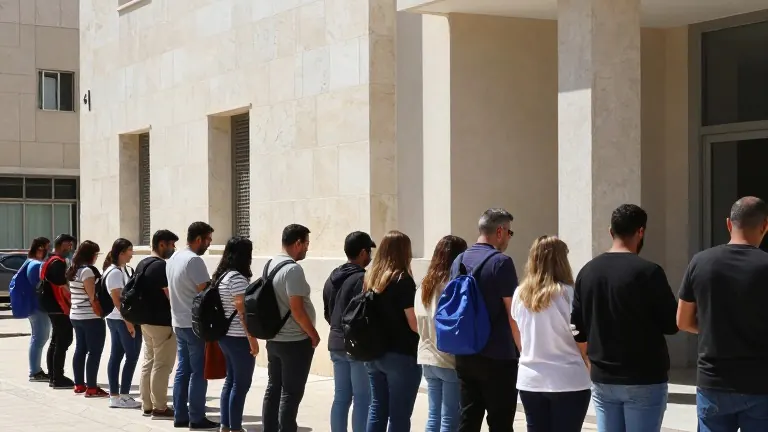
Young people in France kept up their nationwide protests over the weekend, calling for better schools and a more secure future as living costs climb. The Interior Ministry said 410,000 people took part on Saturday, including 110,000 in Paris.
The movement began in mid-September, when high school students blockaded campuses to protest overcrowded classrooms, often with 32 to 35 pupils each, along with unreplaced absent teachers and run-down buildings. Placards at the marches carried slogans such as "We have a future to build, not to endure."
Teachers have since joined over low pay. According to the OECD's Education at a Glance 2026 report, French teachers earn a gross average of 41,968 euros ($46,900) a year, compared with 69,453 euros ($77,700) in Germany. What began as a local strike over school resources has drawn in trade unions and civil servants, and has grown into a wider economic and political crisis. Much of the anger is aimed at a proposed 54-billion-euro ($60bn) package of cuts and tax measures in the 2027 budget, which includes civil servant salary freezes.
Journalist Amine Snoussi, formerly a parliamentary assistant at the National Assembly, told Al Jazeera that students are studying in cold, dirty buildings, some infested with rats, and that absent teachers have gone unreplaced for over six months in some schools. He said this is happening as thousands of teaching jobs are cut and public money continues to reach private schools.
The government has imposed curfews and deployed police across the country. President Emmanuel Macron has accused ultra-left groups of trying to "bring down the Republic" and warned that those behind violence will be held to account. He met student representatives on Friday for the first time since the protests began, but the talks did not ease tensions, and the representatives called for more mobilisation until concrete action is presented. During a visit to Marseille on Monday, Macron said he had asked the government to address the "legitimate demands" behind the movement. French media report that changes to the Parcoursup university admissions platform are expected.
Analysts point to a severe fiscal squeeze. Economist Lucas Chancel says public funding for higher education, student life and research, relative to student numbers and adjusted for inflation, has fallen 20 percent since 2017. National debt has reached about 3.6 trillion euros ($4 trillion), or 119 percent of GDP, and the deficit is expected to hit 5.4 percent of GDP in 2026, well above the EU average of just over 3 percent. In an October 7 address, Prime Minister Sebastien Lecornu said the anger among young people "didn't come out of nowhere" and promised a plan by the end of October.
Debate has also turned to wealth distribution. Economist Thomas Piketty argues that private wealth has grown from 300 percent to 600 percent of GDP, concentrated among the richest, and says "the problem to solve is simply one of distribution." An OFCE review from January 2026 found that people aged 60 and over, a quarter of the population, hold 60 percent of the country's wealth. A government report seen by Reuters noted that nearly a third of some ministries' budgets goes to pensions for retired civil servants, limiting spending on education.
Others see a different root cause. Antonio Fatas, an economics professor at INSEAD, says France's redistribution system is at least comparable to those of other European countries, and that years of limited growth fuel demands for state support. With public spending at roughly 57 percent of GDP, including 14 percent on pensions, he said there is little room to "just spend the way out of this," and he cited political paralysis on reform as a key obstacle.
Piketty and Snoussi both urge reinvestment in education and health. Snoussi put the choice to the government this way: "invest, or step aside."
Originally published by News Media House · Source: Al Jazeera