France Integrates Ten European Allies Into Nuclear Command Structure
A new defense pact deploys French Rafale jets across the continent as trust in Washington wanes.
By Alyssa Parker ·
France has finalized a security framework with ten European nations that places Paris at the center of the continent's nuclear defense strategy. The Wall Street Journal reported on Monday that this initiative, termed forward deterrence, aims to counter Russian aggression by embedding French military assets within allied territories.
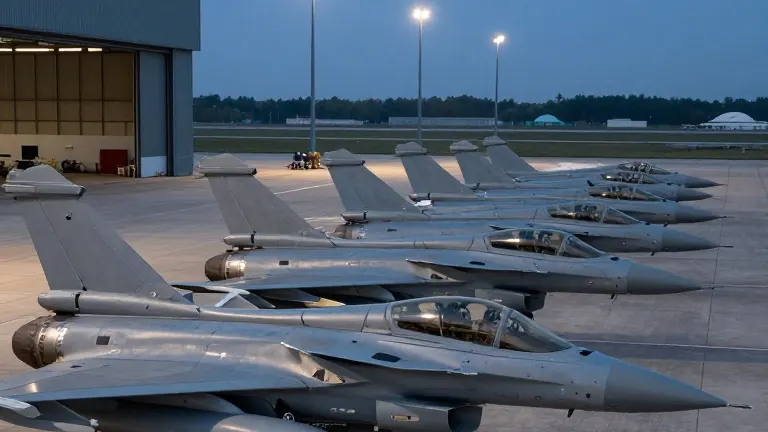
The agreement includes the construction of new infrastructure, communications networks, and intelligence-sharing links. It also authorizes the deployment of French nuclear-capable Rafale fighter jets to bases across Europe. The United Kingdom, Germany, Poland, the Netherlands, Belgium, Finland, Norway, Sweden, and Denmark have joined the pact at varying levels of integration since President Emmanuel Macron first proposed the concept in March.
Finnish President Alexander Stubb clarified the scope of his country's involvement to manage domestic expectations. "We don't have any plans to put nuclear weapons on Finnish soil in peacetime," Stubb said. "But we do have plans for creating a strategic dilemma for Russia." He described the implementation as a "10- to 15-years process" designed to enhance information sharing and strategic coordination.
France has negotiated these terms through one-on-one bilateral talks rather than multilateral summits. Senior defense officials noted that this approach forced European partners to maintain constant contact with one another to compare their respective agreements with Paris. This fragmented negotiation style reflects a broader anxiety in Brussels and national capitals regarding the durability of American security commitments.
The shift occurs as doubts grow over whether Washington will risk nuclear escalation to defend a European ally. These concerns have intensified amid US President Donald Trump's pursuit of energy deals with Russian President Vladimir Putin and increased pressure on Ukraine. French officials argue that their deterrent is more credible because of shared geography. "We share the same geography, we are part and parcel of the same continent," said Chatel, an adviser to Macron, at the Warsaw Security Conference.
Macron launched the initiative in March by linking France's survival to that of its neighbors. "Could we consider that the survival of our closest partners may be put at risk without it affecting our vital interests?" he asked. Norwegian Foreign Minister Espen Barth Eide stated that the plan supplements, rather than replaces, existing US guarantees. France has also resumed nuclear device production for the first time in decades and will keep the size of its stockpile confidential.
The nuclear force will remain entirely under French command. One government minister from a partner nation said, "The French will let us participate in their nuclear deterrence as much as the Americans." This centralized control was a deliberate choice to make the strategy palatable across France's political spectrum. It specifically aims to appeal to the far-right party of Marine Le Pen, which polls ahead in the presidential race scheduled for next spring.
Source: The Jerusalem Post
More Politics · World news · Report a business · Got a Story?