Bell's Diagnostic Methods Get New Scrutiny in Fitzharris Biography
Medical historian Lindsey Fitzharris has published Sleuth-Hound: The Case of the Real Sherlock Holmes, a biography of the Edinburgh surgeon who taught Arthur Conan Doyle and whose observational tricks shaped a famous fictional detective.
By Alyssa Parker ·
The conflict inside the new biography is who deserves credit for Sherlock Holmes's methods. Arthur Conan Doyle built a literary franchise on deduction, but the diagnostic techniques he borrowed belonged to Joseph Bell, a University of Edinburgh surgeon who taught Doyle as a medical student. Lindsey Fitzharris's Sleuth-Hound: The Case of the Real Sherlock Holmes, published as of Oct. 26, 2026, argues the case for Bell by returning to the medical history of 19th-century Edinburgh.
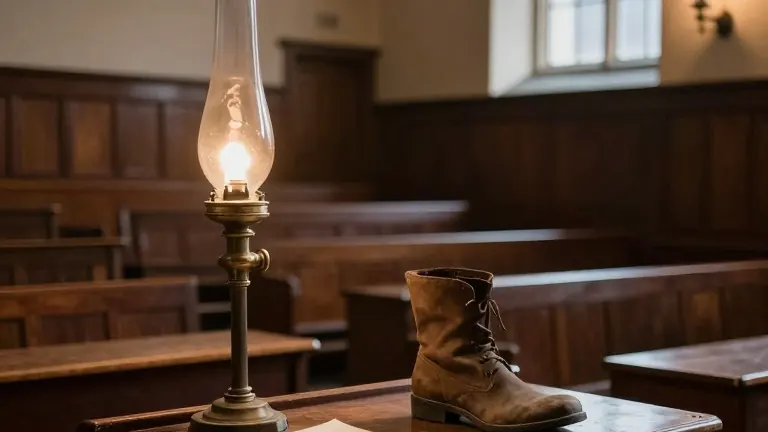
Bell inferred a patient's occupation, habits, and ailments from visual cues. He once identified the clay on a patient's boots to reconstruct the walk to the infirmary, an incident Doyle folded into The Sign of the Four. Bell also worked alongside a local police surgeon on prominent murder cases of his era, applying the same observational routine outside the ward.
Fitzharris has written on medical subjects before. The Butchering Art, published in 2017, covered Scottish surgical pioneer Joseph Lister. The Facemaker, published in 2022, examined Harold Gillies, the surgeon who rebuilt the faces of soldiers wounded in World War I. In 2020 she hosted The Curious Life and Death Of.. for the Smithsonian Channel, running virtual autopsies, testing blood samples, and interviewing witnesses on cases ranging from Pablo Escobar to Harry Houdini. With her husband, caricaturist Adrian Teal, she also published the illustrated children's book Dead Ends! Flukes, Flops, and Failures that Sparked Medical Marvels last year.
Fitzharris said she knew of Bell through her work as a medical historian, but noted that no commercial book had treated him at length. A 1982 volume by Ely Liebow exists, she said, and readers in the Sherlockian community know Bell through it. She added that she wanted to bring a medical history lens to the subject.
The book places Bell in the same Edinburgh that produced body snatchers and the surgical use of ether, the city where Doyle studied under him. That setting also produced the techniques Doyle adapted for fiction: reading a person from surface details, then following the trail those details open.
Fitzharris previously published The Butchuring Art in 2017 and The Facemaker in 2022, and hosted the Smithsonian Channel series The Curious Life and Death Of.. in 2020.
Source: Ars Technica