CAP Board Votes to Reduce Funding for Rocky Mountain Cloud Seeding
The Central Arizona Project will cap annual contributions at $525,000 in 2027 after a close vote on whether upstream snow increases benefit Arizona customers.
By Alyssa Parker ·
The Central Arizona Project, which delivers water to the Phoenix and Tucson areas, will lower its annual financial support for cloud seeding in the Rocky Mountains. The agency’s board voted against fully renewing the program’s funding level at its recent meeting. Starting in 2027, CAP’s contribution to the collaborative effort will be capped at $525,000 per year. That amount is scheduled to rise gradually until it reaches $750,000 annually in 2036. Previously, water agencies in Arizona, California, and Nevada sent roughly $1.5 million per year to this upstream work.
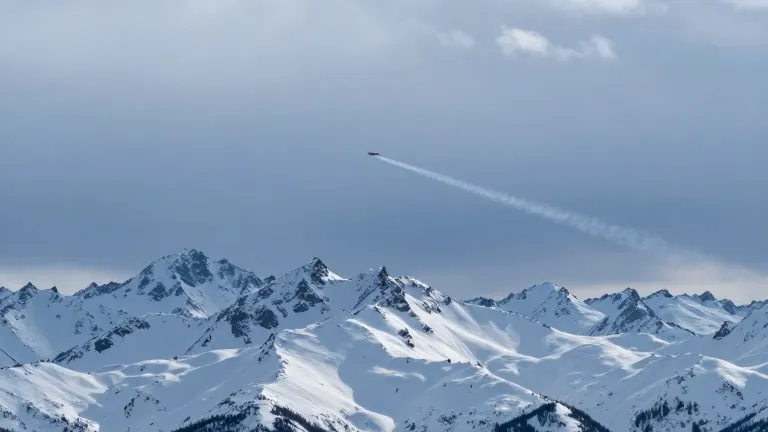
Cloud seeding involves releasing particles into the air to help clouds release moisture as snow. This technology operates in Colorado, Utah, and Wyoming, where more than two-thirds of the Colorado River’s water originates. CAP has participated in this collaborative program since 2007. The initiative also includes water agencies in Las Vegas and Los Angeles, along with farming districts in Southern California.
Board members debated whether Arizona residents would receive adequate value from the investment. Alexandra Arboleda, a board member who voted against the renewal, noted the difficulty of seeing direct benefits for customers and taxpayers. Stephen Miller, another board member who voted against the renewal, expressed skepticism about measuring the final outcome of the technology. He stated that while the science suggests the method works, the specific results remain hard to quantify.
Proponents of the program argued that the technique is cost-effective. Nolie Templeton, CAP’s Colorado River policy and analysis manager, cited studies suggesting potential snowpack boosts of up to 20 percent. She described the strategy as a way to add water to the basin. April Tornquist, a board member who voted to renew funding, acknowledged the potential for a 10 percent increase in snow per storm. She raised concerns about how the Upper Basin states would treat the extra water.
The decision occurs amid ongoing disputes between Lower Basin states and Upper Basin states over water allocation. The federal government recently implemented a plan that mandates cutbacks for Arizona, California, and Nevada, while leaving Upper Basin states with no new mandatory reductions. Arizona and CAP have joined a lawsuit against the federal government regarding this plan. Meanwhile, the Southern Nevada Water Authority and six California water agencies sent letters to CAP encouraging the board to continue funding the Rocky Mountain seeding work.
Snowmelt provides the majority of water to major reservoirs like Lake Powell. In October, rain-charged inflows added about 850,000 acre-feet to Lake Powell. By comparison, average spring inflows from snowmelt reach around 5 million acre-feet. Templeton noted that it would take approximately five consecutive winters of above-average snowfall to fill Lake Powell halfway, according to her assessment of the current water levels.
More News · Cheyenne news · Report a business · Got a Story?