
Weizmann Institute Scientists Program DNA to Drive Self-Powered Artificial Materials
New research in Nature Materials and Nature Physics describes how genetic codes can instruct synthetic gels to build motors and generate rhythmic motion without batteries.
By Alyssa Parker ·
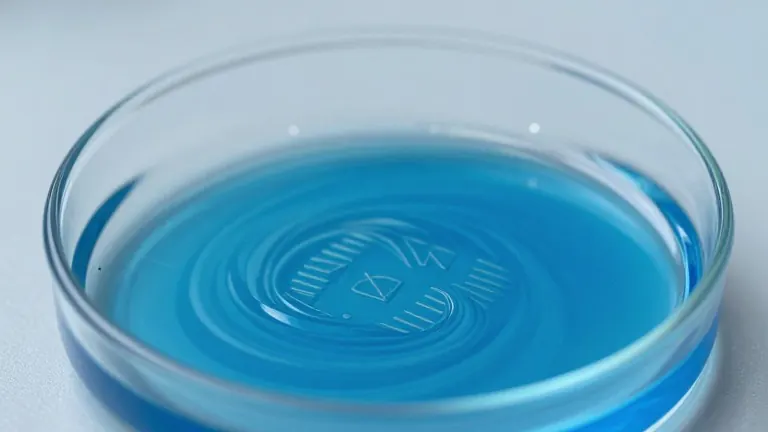
Researchers at the Weizmann Institute of Science have demonstrated that non-living materials can be programmed with DNA to move, change shape, and beat in rhythm. The work, published in two separate studies in Nature Materials and Nature Physics, suggests a path toward artificial matter that controls its own behavior from the inside out rather than relying on external power sources.
The research was led by Dr. Alexandra Tayar of the institute's Chemical and Biological Physics Department. The first study, appearing in Nature Materials, was conducted by doctoral student Rochelle Silverman and staff scientist Dr. Erez Zerbib. They collaborated with Prof. Vincent Noireaux and Dr. David Garenne of the University of Minnesota. The team moved beyond standard methods that involve mixing pre-made motor proteins into artificial gels. Instead, they introduced DNA containing the genetic code for those motor proteins directly into the gel. The gel read the DNA and manufactured the motor proteins within the dish.
As these microscopic engines began to push and slide protein tracks, the fluid started swirling and shifting its shape. The researchers found they could dictate the speed, start time, and shutdown of the material by adjusting the amount and timing of the DNA instructions. To steer this motion, the team used chip-patterning techniques to carve microscopic channels and ridges into the glass holding the fluid. These physical tracks guided the self-powered material along predictable routes.
Silverman noted that the team programmed the material to move briefly and then stop. The second study, published in Nature Physics on Monday, focused on creating rhythmic beats. Led by doctoral students Maya Levanon and Noa Goldberg, this group tracked a gel packed with motor proteins and long DNA strands. When the motors churning created movement, the long DNA strands tangled, stretched tight, and then snapped back. This cycle produced a smooth, rhythmic beat without the use of computer chips, batteries, or metal gears.
Levanon stated that the team was amazed by the rhythmic waves, noting that stronger pulses resulted from a denser and more tangled DNA web. For this coordinated motion to occur, the DNA strands had to be long enough to connect neighboring swirls of fluid. Working with physicists from the Technion-Israel Institute of Technology, the researchers discovered that the container's physical size determined the scale of these pulses. Goldberg explained that the wave size increased in direct proportion to the container size, while beat speed depended on the number of tiny motors.
The team found that the oscillations arise from a delayed response in the DNA network. When the active material flows in a specific direction, it stretches the network for about 10 minutes until it reaches its limit. The network then contracts, sweeping the material in the opposite direction. Tayar said this synchronized motion could help nanomedicines penetrate biological barriers, such as the viscous mucus lining human airways. She noted that such polymer chains might synchronize motion in nature, making it more efficient.
Tayar stated in a statement that the studies could eventually make it possible to design active materials with a genetic code that enables them to change their own structure and function on demand. The researchers suggest applications for self-guided microscopic capsules that assemble their own motors to release medicine, as well as soft robotics that change shape at the right time and place. The findings indicate that simple physical boundaries can orchestrate large-scale motion in these new types of materials.